
Under-80% viral suppression in children is a warning sign
South Africa’s paediatric HIV gap
By Dr Nombuso Madonsela, Country Programme Director AIDS Healthcare Foundation (AHF)
South Africa’s HIV programme has shown what is possible when treatment is scaled, systems are strengthened, and accountability becomes non-negotiable. Adult outcomes have improved over time; however, there is an uncomfortable truth that must be confronted: children and adolescents are still being left behind.
Viral suppression among children nationally remains below 80%. That is not just a statistic – it is a signal that the system is still not designed around childhood, caregiving, and adolescence. If we are serious about ending the AIDS epidemic as a public health threat, we cannot accept a reality where children have a lower chance of reaching the same life-saving outcomes that adults increasingly achieve.
Paediatric HIV care is shaped by two sets of barriers that collide every day: what happens inside clinics, and what happens outside them.
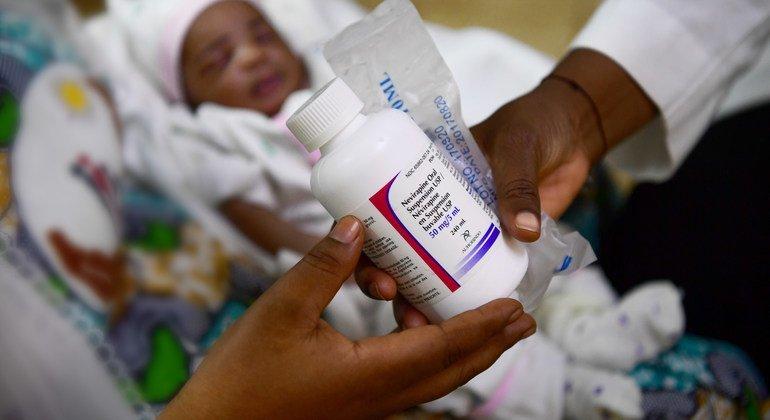
On the clinical side, too many services still struggle with limited child-friendly formulations, delays in viral load testing, and skills gaps among some healthcare workers when it comes to managing paediatric and adolescent HIV. These are not small issues. If the right regimen is not available, if viral load results are delayed, or if teams are not adequately supported to manage paediatric cases confidently, children pay the price.
On the social side, adherence and disclosure do not “live” at the clinic. They live in homes with diverse, sometimes fragile family structures. They are shaped by stigma, caregiver literacy constraints, and socio-economic pressures that can make consistent care feel impossible. Ill health among caregivers, employment demands, fear of disclosure, and non-disclosure are not mere concepts; they are common reasons young patients drift from care. This is why a purely facility-based response will always fall short.
We must design services around real life
If paediatric suppression is below 80%, the answer is not to blame families or youth. The answer is to change the way services are designed.
Caregivers must be placed at the centre of paediatric HIV programmes, because caregivers are the ones who manage routines, appointments, medication, and difficult conversations about disclosure.
Service design must also shift for adolescents, because adolescence is a unique stage, not simply an older version of childhood. Many districts are already piloting digital channels to keep teens engaged, and this is exactly the type of innovation that needs proper resourcing and national guidance. If the system does not meet adolescents where they are, it will continue to lose them.
Four priorities South Africa can act on now:
Closing the paediatric gap does not require a reinvention of the HIV response. It requires disciplined focus on what works and the political will to deliver it consistently.
1. Strengthen caregiver support
Caregiver support must be funded and structured as a routine part of care, including treatment literacy and support for disclosure.
2. Ensure child-friendly regimens are consistently available
Procurement and supply chains must reliably deliver child-appropriate formulations where children receive care to avoid stock-outs and treatment instability.
3. Scale routine viral load testing and speed up turnaround times
Viral load monitoring is the clearest tool for assessing whether treatment is working. Delays and gaps mean delayed action and delayed action means preventable treatment failure.
4. Build real partnerships beyond health
Children do not navigate HIV in isolation. Schools, Early Childhood Development Centres (ECD centres), and community support structures must be part of the response. Cross-sector partnerships spanning health, education, and social services are not optional add-ons-they are indispensable, often determining whether individuals remain engaged in care or are lost to follow-up
Accountability must include children
Budgets alone will not solve the paediatric gap, but finances still matter. Districts need resources to scale ECD and school-based HIV literacy and to build adolescent engagement touchpoints that actually work. Caregiver support should be funded as a core line item, not an optional project. And there should be public reporting on paediatric viral suppression, because what gets measured gets managed, and children deserve to be measured with the same seriousness as adults.
A fair HIV response gives children an equal chance
From AHF’s perspective, the principle is straightforward: children and adolescents must have an equal chance at viral suppression. That means the right drug, at the correct dose and form, at the right time, and wrap-around support that makes adherence possible. It also means staying anchored in basics: testing early, starting promptly, and tracking viral load consistently.
Bridging the paediatric gap is possible. Near-term work, stronger caregiver support, consistent access to child-friendly treatments, scaled and timely viral load testing, and cross-sector partnerships can move the under-80% suppression rate upward. The aim is the same that drives adult success: a health system that meets people where they are and stays with them until viral suppression is the norm, not the exception, especially for children.